5 Great Herbs To Make Your Digestive System Feel Fantastic!
Dr Patrick Jones
7/23/20264 min read
You can watch the video here👇
https://youtu.be/7tGhXhAdQl4?si=y2snkp_uqgJxs1Sv
Have You Got Guts?
Well, if you do, and if they ever get grumpy, there are some great herbs we should talk about.
Hi, I?m Dr. Patrick Jones from the HomeGrown Herbalist School of Botanical Medicine.
A fantastic online school for folks just like you that enjoy learning about the amazing healing powers of medicinal plants.
But I digress…
By the way, if you?re disappointed that I?m about to stop digressing,
Click Here and you can learn all about the school.
Meanwhile, Back at the Blog Article…
Today I want to talk about five rock star herbs for the digestive system.
Everybody has guts and there are days for everybody when things go awry with our innards. But no worries. Because it seems that in planning this world, The Good Lord foresaw that a lot of His children would eat dumb things and get bellyaches and other gastrointestinal ills.
So, He has provided us with a lot of incredible medicinal plants to address these maladies. Let me introduce you to five of my favorites that might be good additions to your herbal medicine cabinet.
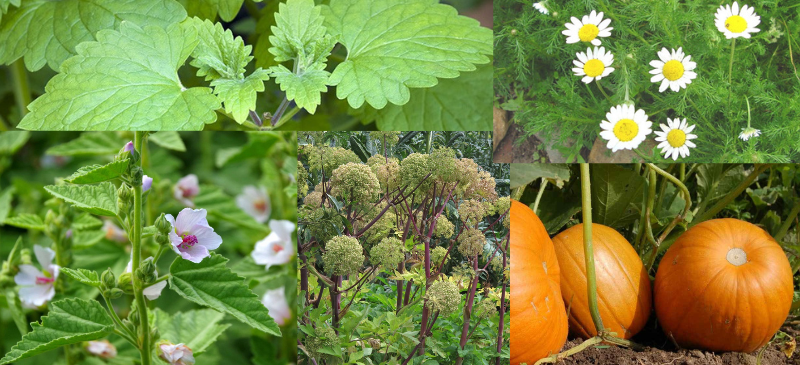
1. Marshmallow (Althea officinalis)
Marshmallow is a perennial plant that?s really easy to grow. And it?s pretty. Go plant some in your garden. The root and leaf are both medicinal, but the root?s better. It?s perfectly safe during pregnancy and nursing. It?s safe for little kids and little old ladies and dogs and horses and aardvarks and anything else with guts. Marshmallow root is amazingly soothing to the tissues of the digestive tract from top to bottom. You can put the dry powder directly on a canker sore on your lip, and it?ll feel better immediately. Or drink a tea to soothe a sore throat, or mix the powder in a smoothie for anything from acid reflux, to indigestion, to diarrhea to IBS. It?s my first go-to for anything intestinal, and it?s in about every digestive formula I make.
2. Chamomile
There are two kinds of chamomile: German (Matricaria recutita) and Roman (Chamaemelum nobile).
You can tell them apart by their accent. Also, the Roman chamomile talks with her hands more.
“Mama Mia Bambino. Wassa matta you? Whatta you been eating? You no worry, mama fix it.”
The German is an annual and the Roman is a perennial. But once you?ve planted either, you?ll never need to plant them again. The beautiful little yellow and white flowers of either of these species is the medicine. And what a great medicine! Like all the plants we?ll be talking about here, chamomile is an amazing remedy for all sorts of issues, but for digestive ills it really shines. It has a calming, nervine action that has a particular affinity for the digestive system. It just calms things down. So it?s great for stomachaches, diarrhea, hiatal-hernias, gastric reflux… honestly, just about anything that?s making your guts grumpy. And that same calming action of chamomile also calms the mind. It?s just very relaxing. So it?s particularly excellent for folks whose gastrointestinal maladies have anything to do with stress or tension. Chamomile also has really broad margins of safety during pregnancy and nursing or with little people. (By the way, our Digestive Support Formula has both Marshmallow and Chamomile ? Check it out)
3. Catnip (Nepeta cataria)
Catnip is in the mint family and, like all the mints, has a powerful ability to calm and soothe the digestive system. One of my favorite catnip uses is for colicky babies. A little squirt of the tea can make those poor little rascals feel better in no time. And, as an added bonus, it makes them a little sleepy so they?ll have a nap. Win win!
It also works on big people with bellyaches and such. By the way, lots of moms have told me that if they take catnip, their babies are less colicky. It?s going through the milk. Talk about an easy delivery system. The aerial parts of the plant are the medicine… leaves, stems, everything. No contraindications to speak of…
Oh, except for cats. Cats that have been using catnip shouldn?t drive cars or operate heavy machinery. Cat brains are different than human brains and the catnip makes them… well… a little less inhibited and less responsible than usual.
4. Angelica Seed (Angelica archangelica)
Angelica seed is a very effective muscle relaxant, especially for the muscles lining the intestines.
Diarrhea… wait… we know each other well enough to talk about diarrhea right? OK, good! Anyway, diarrhea is a result of hyperactive gut muscles. They get pumping so insistently that there isn?t time for water to be reabsorbed from the stool and the result is… well… not very solid.
In diarrhea cases, Angelica seed has a direct antispasmodic action on those hyperactive muscles.It just slows things down and gives the bowels the time they need to do their job. Which is, of course, to make nice, normal, solid poop. (Want an easy button? Check out the Constant Patience Formula ->)
5. Pumpkin (Cucurbita pepo)
Yes, pumpkin?that?s fun to say: Curcurbita pepo.
Anyway, yeah, regular old pumpkins. There are several fantastic research studies showing that pumpkin seeds can anesthetize both roundworms and tapeworms and help the body expel them. There are also some excellent studies showing they can?t.
Wait, what?
The problem is that the levels of the chemical that knocks out the worms?cucurbitacin (Hmmm… that?s fun to say too)?
Anyway, the levels of that chemical can vary wildly depending on the variety of pumpkin you get. So get an old, heirloom variety pumpkin and not some new-fangled hybrid that they?ve bred all the medicine out of. But, even if the seeds aren?t good wormers I don?t care. I still love pumpkins.
My favorite medicinal part of the pumpkin is the flesh. It?s chock-full of amazing fiber. So is fiber really a medicine? Well if you?re constipated, heck yeah, it?s medicine!
Herbalists call plants with that sort of fiber content aperients. That?s the funky herbalist word for a gentle, bulking laxative.
And pumpkin is one of the best. So, if things aren?t moving along like they ought to be: eat some pumpkin.
In addition to the laxative benefits, pumpkin is also a favorite food of the beneficial bacteria in the gut. It?s amazingly good for those little guys and helps them to do all kinds of great jobs for us.
And you wouldn?t believe all the jobs they do. But that?s a topic for another article.
So there you have it. Five really valuable herbs for the digestive system that I use on cases all the time.
If you?d like to learn more about the digestive system and the dozens of other amazing plants that can help it, take a look at
The HomeGrown Herbalist School of Botanical Medicine. I?d love to join you on that journey.
Contact
Stay Informed
Robin@renewedlife7.com
539-664-3951
© 2024. All rights reserved.
© 2026 BY RENEWED LIFE7. All Rights Reserved.
Disclaimer
Always check with your doctor before starting any new health practice. This is not medical advice. This is not meant to treat, cure, prevent or diagnose. This is for educational purposes only. Results vary.